Home / Blog / Veterinary nursing roles
Veterinary nursing roles
Charity Veterinary Nurse Jobs: Compare the Service Model First
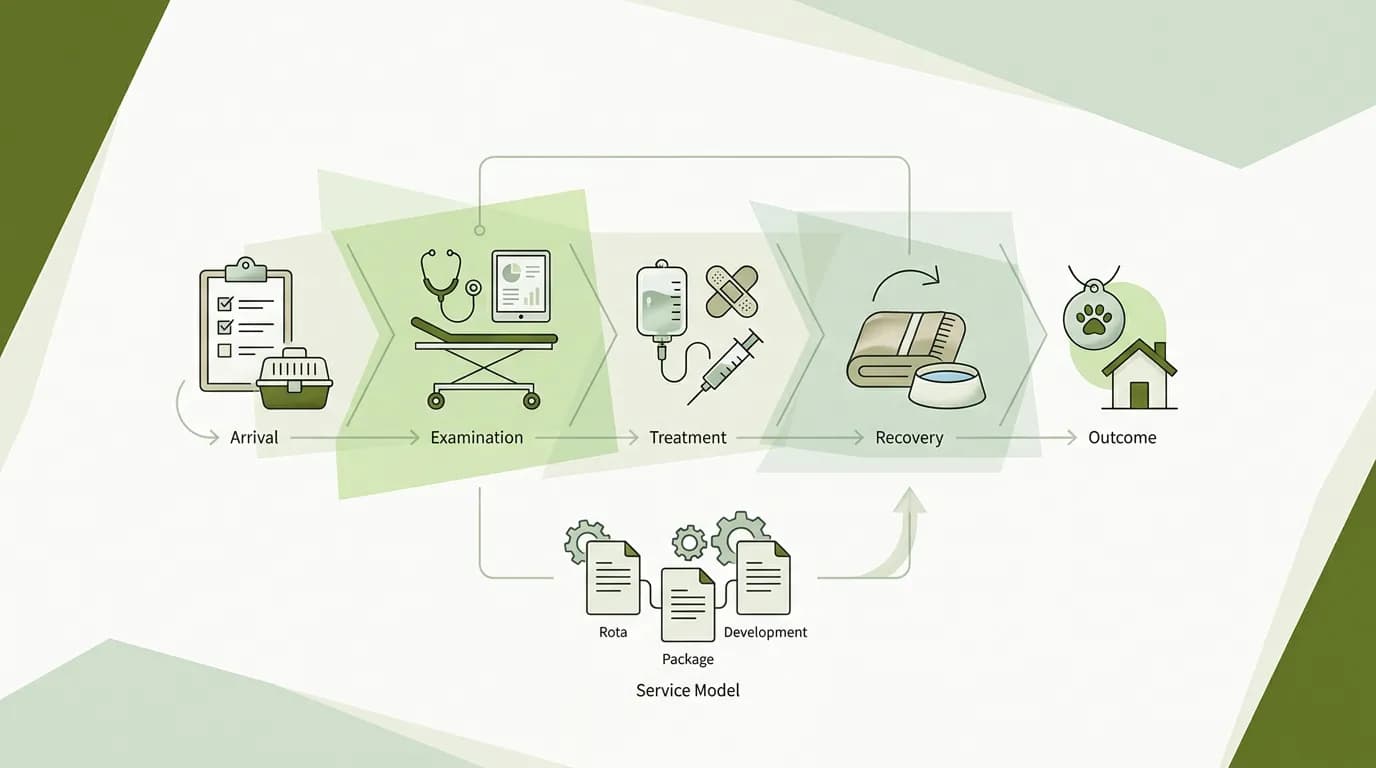
A charity employer's mission does not tell you what an RVN shift will contain. Follow one patient from arrival to outcome before you compare the rota, package and development offer.
“Charity practice” can describe very different nursing work
Some charity RVNs work in pet hospitals treating animals whose owners meet service criteria. Others nurse animals connected with welfare investigations, rehabilitation or rehoming. The clinical fundamentals may overlap with first-opinion work, but the route into care, the people you communicate with and the definition of a successful discharge can differ. PDSA describes its RVNs moving between theatre, inpatient care, consultations, admissions and discharges for eligible clients. An RSPCA nurse profile adds ward work, welfare backgrounds and occasional off-site health checks. A 2026 Blue Cross hospital vacancy combined routine and emergency nursing with owner education under means-tested service criteria. Ask which model applies at the exact workplace rather than treating “charity” as a complete job description.
Follow three patient journeys, not one headline caseload
For an owner-facing hospital role, trace who confirms eligibility, how urgent and routine cases enter the service, what the nurse explains to the client and what happens when the preferred clinical plan exceeds the service remit. For a welfare or rehoming role, trace the handover from inspector, centre or foster team, who can consent to treatment, where the animal recovers and what nursing information follows it into rehabilitation or a new home. For a mixed service, ask how the day is divided between consultations, theatre, wards, diagnostics, client communication and off-site work. This reveals operational differences that a list of equipment cannot: the pace of admissions, continuity with owners, discharge planning, safeguarding or evidence procedures, and how competing cases are prioritised.
Make the clinical boundary concrete
Do not assume charity work is either clinically limited or automatically high-volume. Ask for examples from the previous month: common procedures, emergency presentations, inpatient numbers, nurse consultations, diagnostics used by RVNs and delegated Schedule 3 work. Then establish who makes decisions when resources, eligibility or welfare considerations constrain the options. PDSA's role page includes theatre, inpatient care, consultations, dispensing and conversations about client contributions; the RSPCA profile describes involvement in anaesthesia preparation, wound care, fluid therapy, feeding plans and inpatient records. Those examples show breadth at named services, not a promise about every charity workplace. A shadow shift or a conversation with the nursing lead should confirm what the local team actually does.
Examine the handoffs around emotionally difficult work
Mission alignment can make a role meaningful, but it does not remove workload or emotional exposure. The RSPCA profile explicitly describes poor body condition and difficult case histories as challenging. The Blue Cross vacancy described a dedicated euthanasia room, daily team updates, monthly meetings, wellbeing champions and Mental Health First Aiders. Treat these as employer-specific evidence, then ask how the workplace handles the same moments: who briefs the nurse before a distressing case, where debriefing happens, who manages difficult client conversations, whether breaks are protected after demanding events and how staff rotate through wards, theatre and consultations. Compare the answers with the four-week method in /blog/rvn-rota-and-support-job-check rather than accepting “supportive team” as a complete safeguard.
Compare the employment package separately from the mission
A strong connection to the cause should not replace a normal offer review. Put contracted hours, weekend or on-call duties, overtime or TOIL, paid breaks, salary, pension, leave, sick pay and contract length in one column. Put CPD money, paid learning time, RCVS-fee support, clinical-supervisor responsibilities and progression routes in another. PDSA's general RVN page identifies Nursing Team Leader and Head Nurse as possible routes within that organisation, but progression still depends on local vacancies and selection. Use /blog/rcvs-fees-cpd-rvn-job-benefits to separate money from protected time, and /blog/rvn-clinical-supervisor-role if student support appears in the duties. A fixed-term charity post may still be the right move; the end date and route to another post simply need to be explicit.
Leave the interview with one complete patient map
Ask the interviewer to walk through a recent representative case from arrival to discharge, transfer, foster care or rehoming. Note who referred the patient, who consented, what the RVN owned, which other teams were involved, where a difficult decision was escalated and what happened after clinical care ended. That single map is harder to answer with generic recruitment language and easier to compare across employers. Then review current /categories/veterinary-nurse-jobs and /jobs vacancies for the same service-model details. If the right charity role is not open now, /job-alerts can help you watch without lowering the standard of evidence you expect from the advert and interview.