Home / Blog / RVN career progression
RVN career progression
Senior RVN to Head Nurse: Check the Role Before You Step Up
A Head Nurse title can combine clinical nursing, rotas, stock, student support and people leadership in very different proportions. Get the weekly capacity and decision boundaries in writing before accepting the step up.
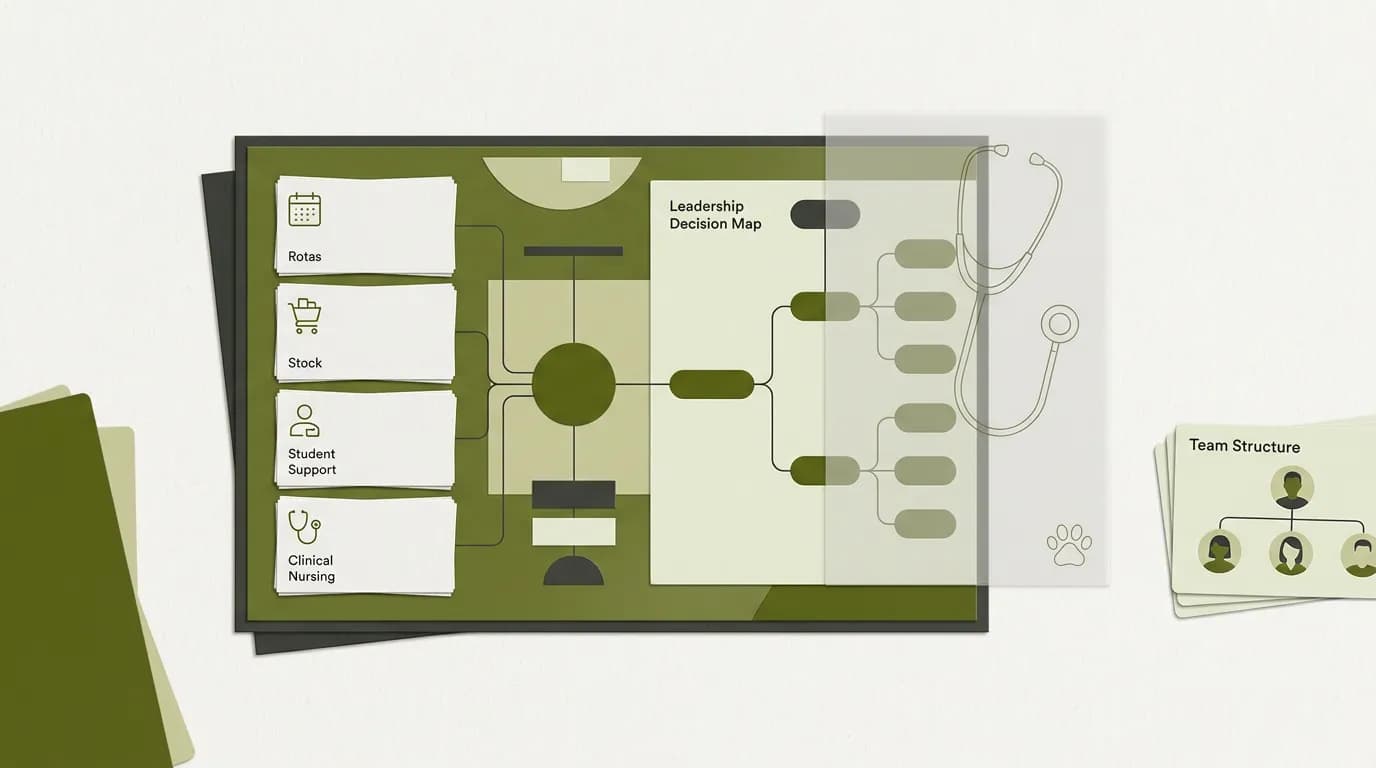
Start with the team and responsibility map, not the title
Ask for the current organisation chart and mark every person you would lead, coach or coordinate: RVNs, student nurses, VCAs, reception colleagues and any deputies or senior nurses. Then place the Practice Manager, Lead Vet, Clinical Director, owner and regional support around that team. One current Vets4Pets Head Veterinary Nurse vacancy combines clinical nursing with stock control, rota management and leadership of three RVNs, two student nurses and two VCAs, while a separate Practice Manager and practice owner are also in post. That is one employer's structure, not a universal definition. Use it as a prompt to discover who owns each responsibility in the role you are considering.
Turn a normal week into a capacity sheet
Request a representative four-week rota and colour the hours for theatre, wards, consults, nurse clinics, meetings, one-to-ones, student support, rota work, stock and administration. Mark who covers your clinical work when a people issue or staffing gap needs attention. CAW's guidance for first-time veterinary managers recommends protected time for team check-ins, one-to-ones, planning and organisation; without that capacity, leadership can become an additional burden rather than designed work. Ask whether leadership hours are fixed, what usually interrupts them and how unfinished management work is handled. Compare the rota with the RVN rota and support job check rather than accepting an unspecified promise of admin time.
Build a decision-rights table before the interview ends
For each area, write one of four labels: decide, recommend, administer or escalate. Cover annual leave, rota changes, sickness cover, recruitment, induction, appraisals, performance concerns, student progress, stock purchasing, equipment requests, nursing standards, complaints and clinical escalation. Ask who approves spending, who supplies HR advice and who takes formal people decisions. Clear authority matters because coordinating a rota is different from deciding staffing levels, and monitoring stock is different from owning a budget. The answer also shows where Head Nurse work stops and veterinary practice-management work begins.
Agree the first 90 days before inheriting the problems
Ask what is stable, what is changing and which unresolved issues the incoming Head Nurse will inherit. A useful first-90-days agreement names the line manager, weekly check-in, handover from the previous lead, immediate priorities, decisions that need approval and the evidence used at the first formal review. Include access to an experienced mentor for difficult conversations and a route for urgent clinical, conduct or staffing concerns. CAW recommends mentoring, clear expectations and regular leadership check-ins for first-time managers. Those supports should be visible in the role design rather than assumed from a friendly interview.
Match development support to the work you will own
Clinical experience does not automatically supply practice in delegation, conflict, feedback, finance or change. Ask which leadership skills the employer expects on day one and which it will help you develop. VMG's current veterinary leadership qualifications are open to Head Nurses and aspiring leaders, with selectable study across leadership, organisations, resources, teams, finance, culture and change. That demonstrates the range of possible development areas, not a mandatory qualification for every Head Nurse job. Confirm the relevant course or mentoring support, who pays, whether study time is protected and when you can apply the learning with supervision.
Compare the package with the responsibility increase
Put the written salary beside contracted hours, clinical shifts, leadership hours, weekend and bank-holiday frequency, OOH or duty cover, overtime or TOIL, pension, leave, CPD money, paid CPD time and professional-fee support. Then add team size, formal people responsibility, stock or budget authority, multi-site travel and out-of-hours contact expectations. Do not compare the headline increase while leaving the additional hours or accountability blank. Use the veterinary nurse salary guide for broader package context and the RCVS fees and CPD benefits guide to separate fee payment, learning money and protected time.
Make the decision from the written role, not the promotion story
A suitable Head Nurse offer should let you explain who you lead, when leadership work happens, what you can decide, where you escalate and how the first months are supported. If the employer cannot yet answer those points, ask for a revised job description and sample rota before accepting. If you want deeper clinical work with less people management, compare referral veterinary nurse roles and the veterinary nurse career path. If leadership is the goal, browse current veterinary nurse roles and all jobs, or set job alerts while you wait for a role with workable boundaries.