Home / Blog / Veterinary nursing careers
Veterinary nursing careers
Patient Flow Coordinator RVN Jobs: What Changes When You Leave the Ward
Patient-flow RVN roles use nursing judgement without following a normal ward or theatre shift. Trace one case through the hospital before deciding whether the role fits.
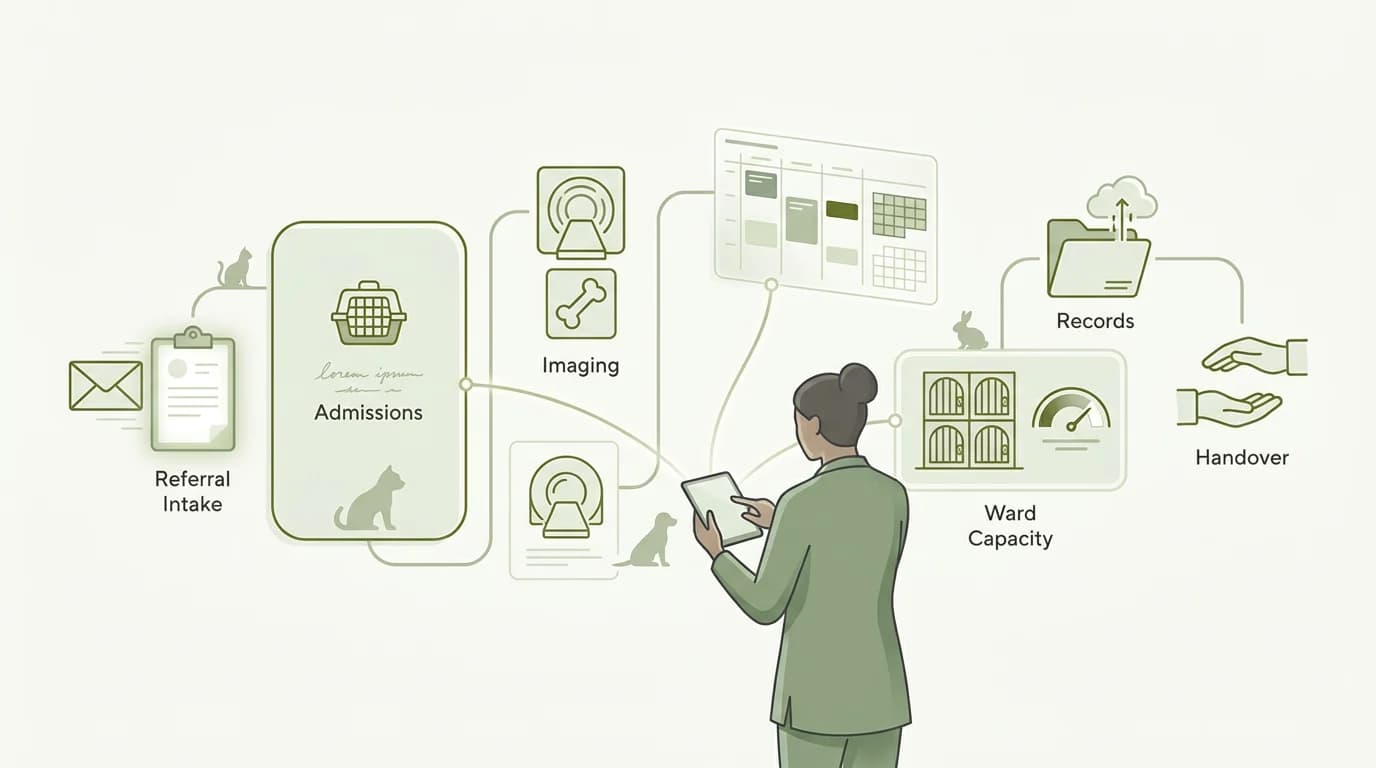
Start with the care clock, not the coordinator title
Patient-flow, workflow, patient-pathway and triage roles are not one standard job. Current UK employer pages show several shapes: London Vet Specialists is recruiting an RVN to coordinate admissions, emergency-referral information, investigations, surgery, imaging, anaesthesia and bed capacity across a multidisciplinary hospital. Quantock Veterinary Hospital separately advertises a twilight triage RVN who manages calls, appointments and arrivals while an on-site night vet and night RVN cover inpatient and surgical work. Hamilton Specialist Referrals lists RVNs with workflow-coordinator, patient-coordinator and patient-pathway titles inside its nursing team. These examples show a real clinical-adjacent role family, not a national job specification. At interview, take one urgent referral from first call to admission, procedure, ward placement and next handover. Write down who owns each decision, record and conversation.
Mark where your authority starts and stops
Ask which choices the coordinator makes, which follow a written acceptance or triage process, and which require a veterinary surgeon, lead nurse or service clinician. A vacancy may use words such as autonomy, triage or case acceptance while still expecting decisions to stay within hospital protocols and the RVN's competence. The current RCVS Code requires veterinary nurses to work within their competence, refer responsibly, communicate with colleagues, keep clear records and coordinate care with the wider veterinary team. That makes the escalation map part of the offer, not an interview detail to leave vague. Request the named clinical escalation point for each shift, the response expected when capacity changes, and the process for conflicting theatre, imaging, ward or anaesthesia priorities.
Trace the handoffs and records around one patient
Draw the systems and people touched by one case: referring practice, client-care team, admission, practice-management record, inpatient board, diagnostic service, theatre or procedure list, ward and discharge or transfer. Then ask who updates each source, how late changes are communicated and where an unresolved task remains visible. London Vet Specialists explicitly assigns its coordinator case scheduling, admission processing, workflow-screen updates, hospitalisation records and communication across anaesthesia, imaging and wards. RCVS supporting guidance says relevant clinical information should be provided promptly to colleagues taking over a case and that referral or redirected cases need proper documentation. A useful interview test is therefore not “are your systems good?” but “show me where the next team sees a changed plan, who checks it and who owns the miss.”
Measure the clinical contact you are actually leaving
Clinical-adjacent does not automatically mean non-clinical, desk-based or free from shift pressure. The current London role includes clinical-service rotations during induction and may involve arrival triage, while the Quantock twilight role supports the night team around its call and arrival workload. Ask for a normal week split between coordination, direct patient contact, meetings, incident review, training and cover for absent colleagues. If you want to retain hands-on competence, ask which skills you will still use, how often, and what CPD or rotation protects them. If you want less physical clinical work, ask which duties can still pull the coordinator back into the ward. Compare that written split with the referral veterinary nurse role guide and the broader veterinary nurse career path, rather than treating the title as automatic progression.
Check whether the role carries influence without hidden line management
A coordinator can direct daily flow without managing performance, rotas or formal development. London Vet Specialists describes its current role as a leadership opportunity with no direct line-management duties at present, supported by RVNs trained in patient-flow responsibilities. Ask who can overrule the schedule, who handles disagreement, whether you chair capacity meetings, whether incident review is part of the role, and whether future line management is optional or expected. Get the reporting line, decision rights, cover model and progression route in writing. If the offer includes people management, compare that part separately with the Head Nurse progression guide and the practice-manager route. A higher title is not useful if authority, support and protected coordination time do not move with it.
Rebuild one pressured shift before accepting
Ask the interviewer to walk through a shift with one emergency referral, a delayed theatre, a full ward and an imaging slot at risk. Record the coordinator's first action, escalation point, system update, client or referring-practice communication, and handover at the end of the shift. Then check the contracted rota, weekend or OOH expectations, breaks, lone-working periods, training, professional-fee support and cover for leave against the RVN rota and support check. Browse current veterinary nurse jobs and all jobs, or set job alerts, but compare clinical-adjacent vacancies by their case journey, decision boundary and retained clinical time rather than by title alone.